Down & Feather
DISCOVERING DOWN
There is such a kind of material, she is light, soft, and warm.
There is such a kind of material, she has a unique globular structure, it looks like blossoming dandelions.
There is such a kind of material, she contains full of air, absorbs and releases moisture, being able to breathe by herself.
She is Down, the unique, green and natural gift.
There is such a kind of material, she has a unique globular structure, it looks like blossoming dandelions.
There is such a kind of material, she contains full of air, absorbs and releases moisture, being able to breathe by herself.
She is Down, the unique, green and natural gift.
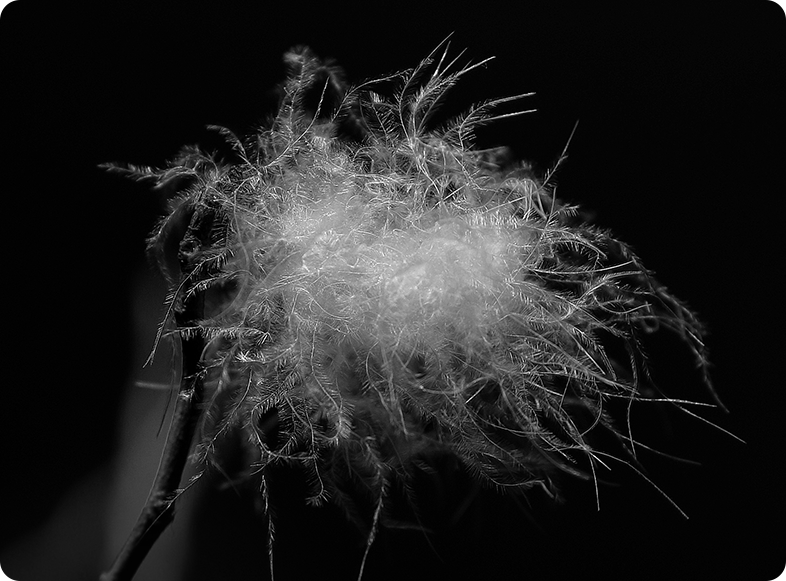
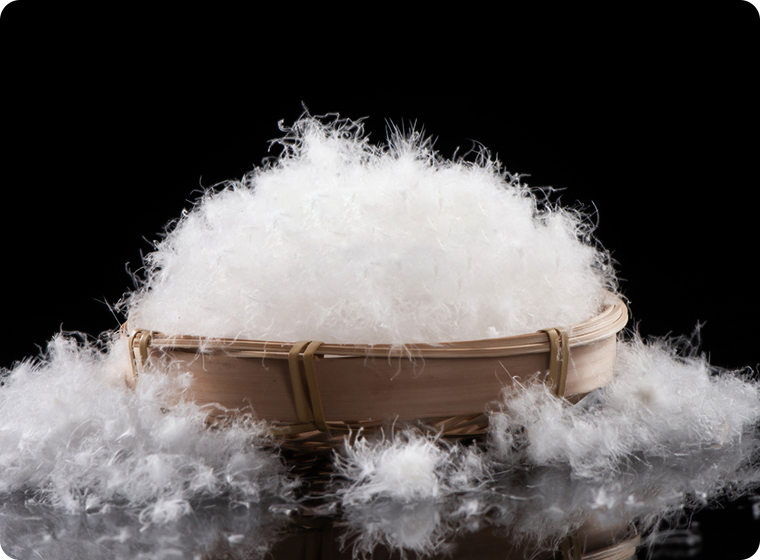
WATERFOWL PLUMAGE
DOWN
Down is the plumage forming the undercoating of waterfowl, consisting of tufts of light flufly flaments (eg. barbs) growing out of the custer core without any quill shaft. Waterfowl down contains down cluster, nestling down, plumule down and damaged down.Waterfowls need down and feathers to keep their body temperature.
- SPECIES
-
 Goose Down
 Duck Down
- COLORS
- White Down Grey Down
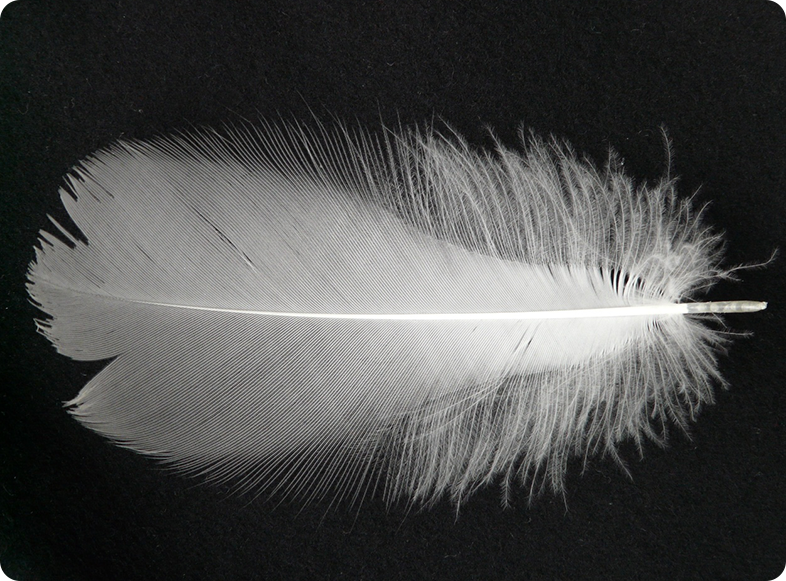
FEATHER
Waterfowl feathers grow on the scarfskin, mostly on the necks, backs, and tails, which will help the waterfowls resist harsh weathers. In feather there is a curved inward quill, soft barbs on both sides, thousands of tiny barbs are crowded on the shaft.
- SPECIES
-
Goose Feather
Duck Feather
- COLORS
- White Feather Grey Feather
WATERFOWLS
Waterfowls are the birds that living on the water surface such as domestic ducks, domestic geese, wild ducks, swan, and graylags. Waterfowls usually have long flat chests and well-developed oil glands in their tails. They are good at swimming by using their webbed feet.
WHERE DOES DOWN COME FROM?
Down & feathers are the by-products of Waterfowl Meat Food Industry, they are from common waterfowl species such as goose & duck.
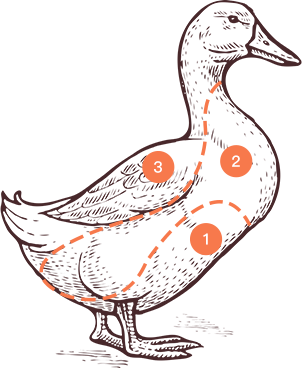
- ③ has approximately 30 grams of valueless wing & tail feathers.
- ② has approximately 40 grams of medium feathers & down.
- ① has approximately 50 grams of small feathers & down.
- HISTORY OF DUCK
- Zoology of China (China) Vol.2 conclude: the common domestic ducks were domesticated from mallard ducks and spot-billed ducks.
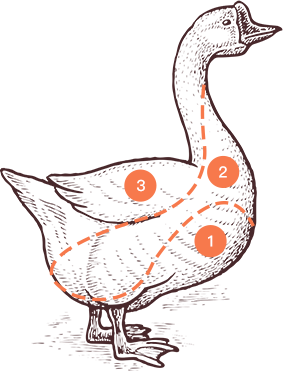
- ③ has approximately 90 grams of valueless wing & tail feathers.
- ② has approximately 150 grams of medium feathers & down.
- ① has approximately 60 grams of small feathers & down.
- HISTORY OF GOOSE
- SCIENTIFIC AMERICAN (USA) reported: About 220 million years ago, ancestor of goose was the companion of dinosaur, scientists discovered a goose fossil from 70 million years ago.
DESCRIPTIONS OF ALL PARTS OF “WATERFOWL PLUMAGE”
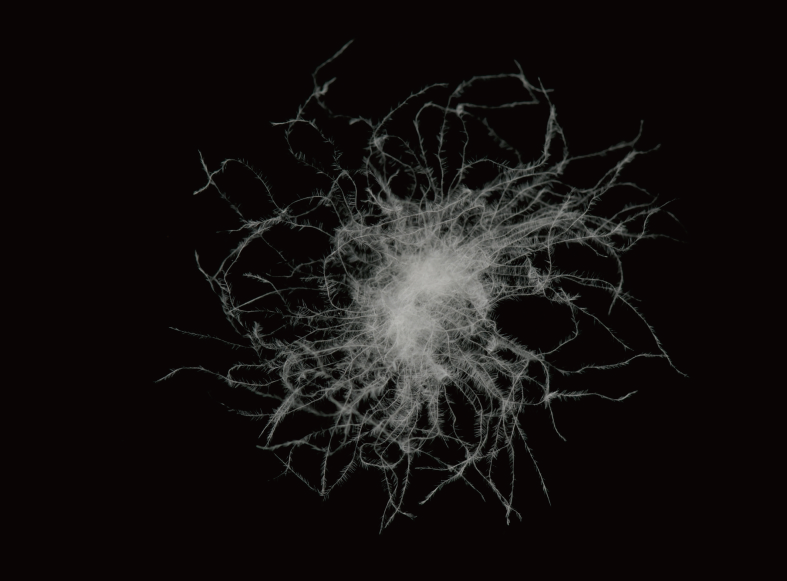
Down
● Down Cluster: Down in a cluster shape with down fibers emanating from the down core.
● Nestling Down: Immature down in an umbrella shape.
● Judgment Reference: 1. Obvious quill shafts, inconspicuous short quill. 2. Three-dimensional
● Plumule Down: Down in a feather shape, fluffy filament barbs grow on soft quill shafts.
● Damaged Down: Down having two or few more fibers emanating from the down core.
● Nestling Down: Immature down in an umbrella shape.
● Judgment Reference: 1. Obvious quill shafts, inconspicuous short quill. 2. Three-dimensional
● Plumule Down: Down in a feather shape, fluffy filament barbs grow on soft quill shafts.
● Damaged Down: Down having two or few more fibers emanating from the down core.
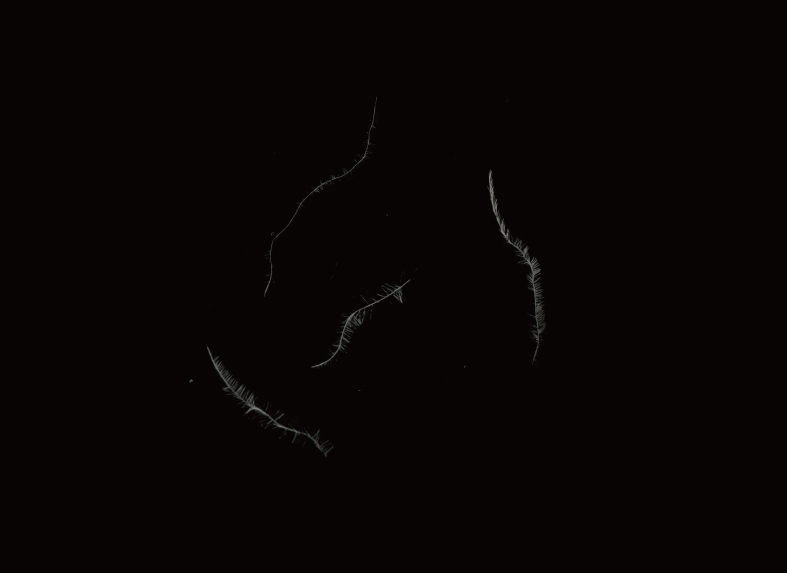
Down Fiber
● A single fiber detached from down or the feather quill point.
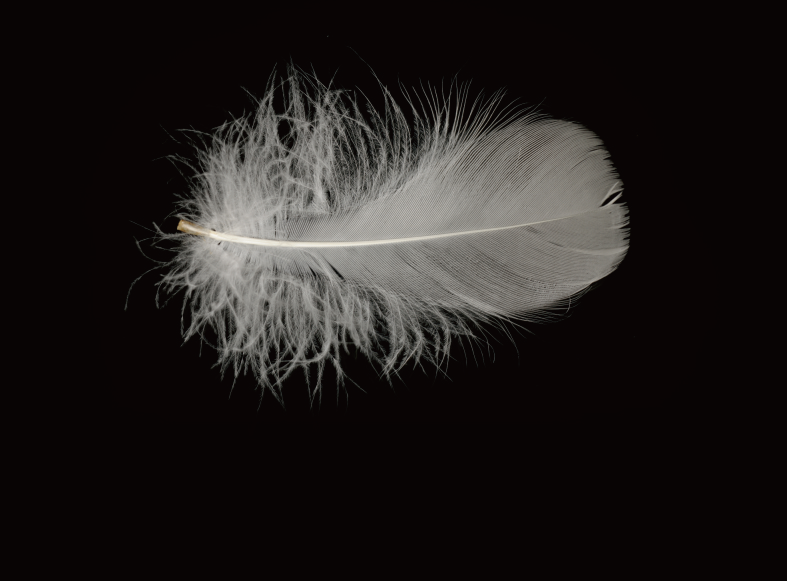
Feather
● Feathers grow on the waterfowl scarfskin. The feather quill shaft can be folded without breaking.
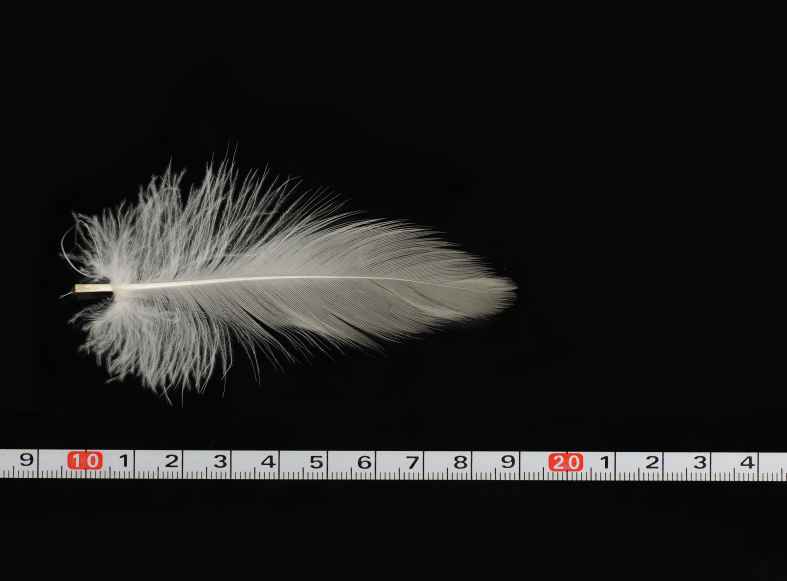
Long Feather
● Long Goose Feather: Goose feather that is longer than 8cm.
● Long Duck Feather: Duck feather that is longer than 7cm.
● Long Duck Feather: Duck feather that is longer than 7cm.
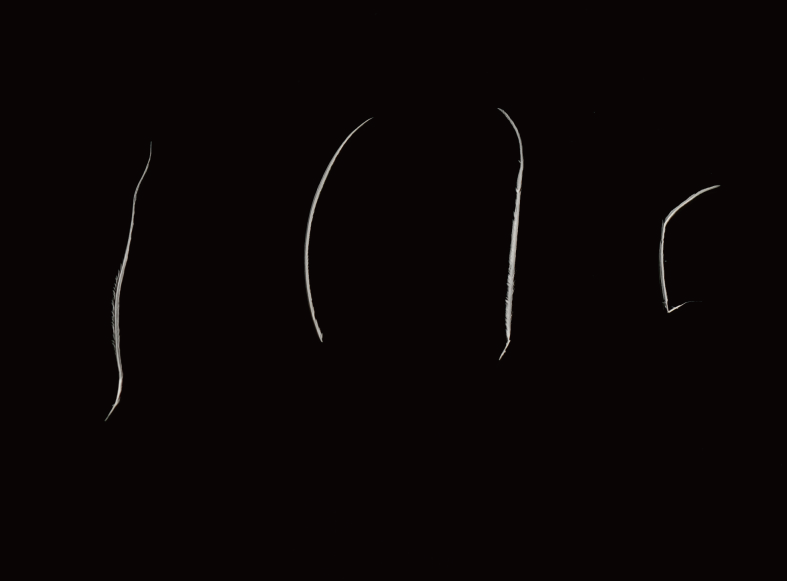
Feather Fiber
● A single feather barb detached from the vane.
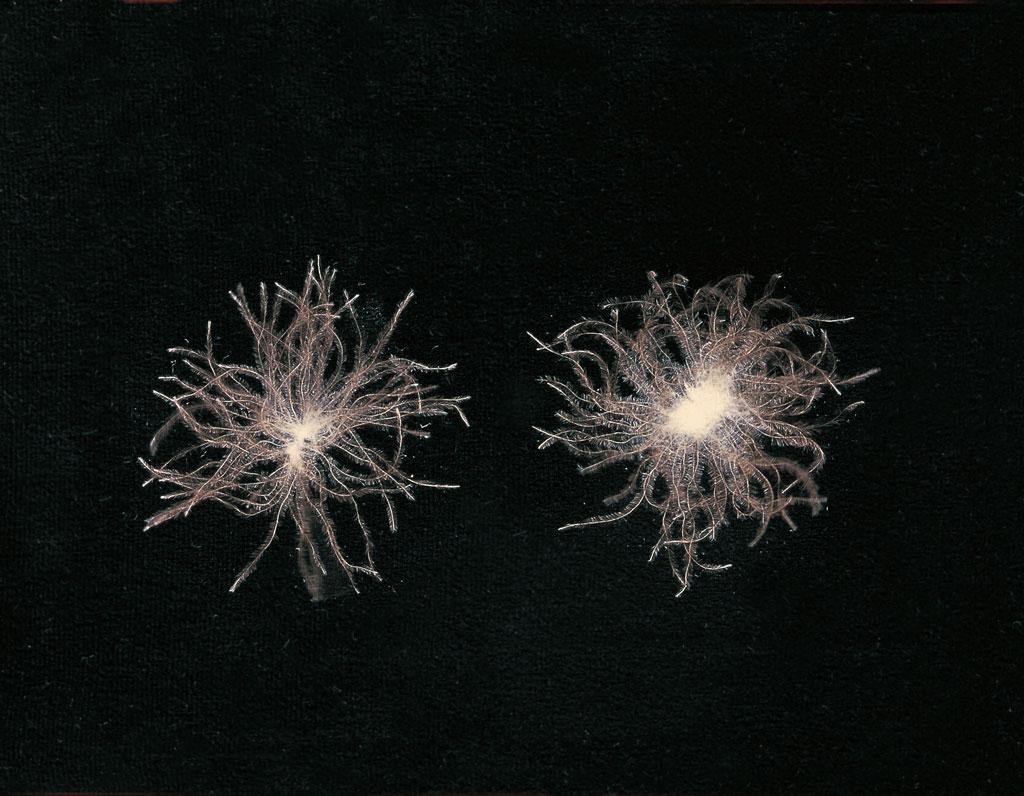
Colored Feather & Down
● Colored Feather: waterfowl feathers that has colors other than white color (including deep yellow color), which are still considered in feather volume.
● Colored Down: Waterfowl down that has colors other than white color (including deep yellow color), which is still counted in down volume.
● Colored Down: Waterfowl down that has colors other than white color (including deep yellow color), which is still counted in down volume.
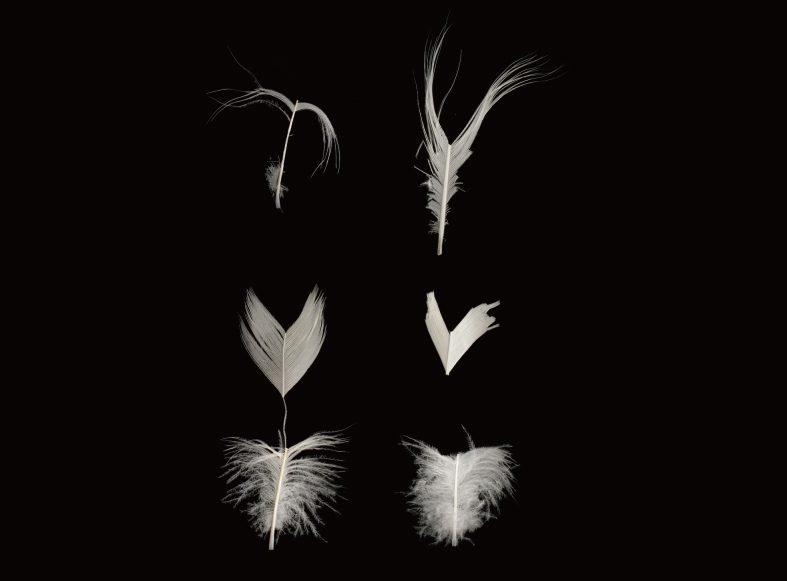
Damaged Feather
● These feathers have been moth-eaten, mildewed or mechanically damaged during washing process, including the broken feather and the feather that has been damaged more than 1/3.
● Judgment Reference:1. Feather with 1/3 damaged area or more. 2. Bald feather quill. 3. Feather quill that has been broken off in the middle. 4. Part of feather surface detached from the feather.
● Judgment Reference:1. Feather with 1/3 damaged area or more. 2. Bald feather quill. 3. Feather quill that has been broken off in the middle. 4. Part of feather surface detached from the feather.
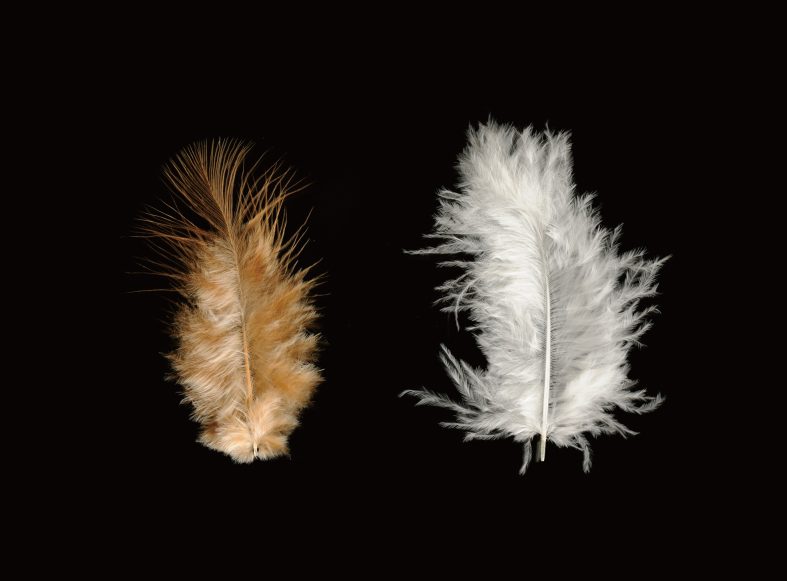
Land Fowl Feather
● Chicken Feather: Looks bright and shiny.Feather fibers are thicker compares to duckeather. Long pointy shape of favion.There is one attached feather on the bottom of the quill, which can be easily distinguished from goose or duck feather. But some of the chicken feathers don’t have attached feathers. Therefore, the attached feather is not the only way to judge if it is a chicken feather. Some other chicken feathers have the shape of a tree branch with yellowish color, and it shows a specific shape of bamboo nodes under the electron microscope.
● Pigeon Feather: feathers plucked from pigeons, with bright and shiny color, which is hard to distinguish it from chicken or other land fowl feathers. Normally needs to identify it under a microscope.
● Pigeon Feather: feathers plucked from pigeons, with bright and shiny color, which is hard to distinguish it from chicken or other land fowl feathers. Normally needs to identify it under a microscope.
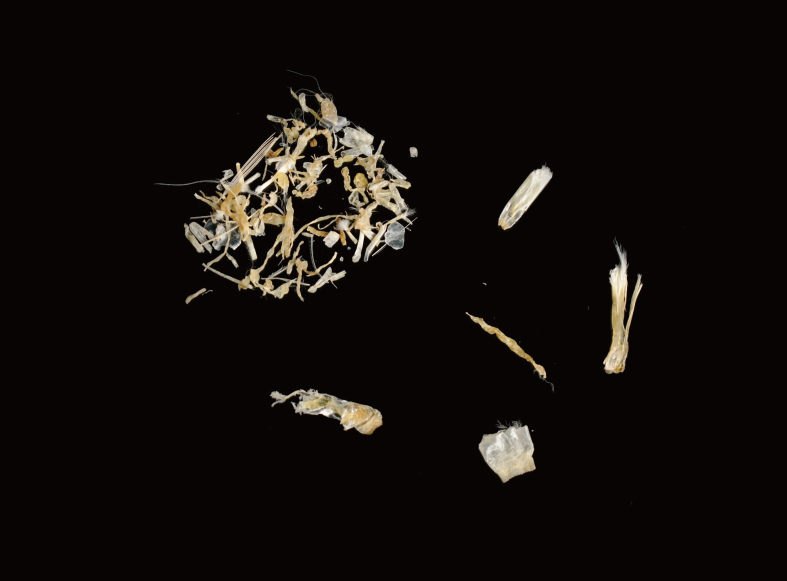
Residues
● Dust, ash, scurf, small vein and other elements that mixed inside the feather and down.
● Judgment Reference: 1. Grass, wood, bamboo chip, fiber, wire, plastic, sand, and other foreign objects. 2. Small veins detached from the shaft. 3. Broken shafts. 4. Wax covering separated from the bottom of immature feather. 5. Fragmented fibers, epidermis, shafts. 6. Left marrow from broken or detached shafts.
● Judgment Reference: 1. Grass, wood, bamboo chip, fiber, wire, plastic, sand, and other foreign objects. 2. Small veins detached from the shaft. 3. Broken shafts. 4. Wax covering separated from the bottom of immature feather. 5. Fragmented fibers, epidermis, shafts. 6. Left marrow from broken or detached shafts.
COMMON MEASUREMENTS OF DOWN QUALITY
Down Content
Down content refers to the proportion of down in the specific amount of feather & down filling material. Down includes down cluster, nestling down, plumule down and damaged down. Down content is one of the most critical quality measurement indicators for feather & down raw materials and finished products. Down content is also the critical factor that will influence the price in the feather & down trading. Higher down content usually represents the better fill power performance and insulation ability of a down product.
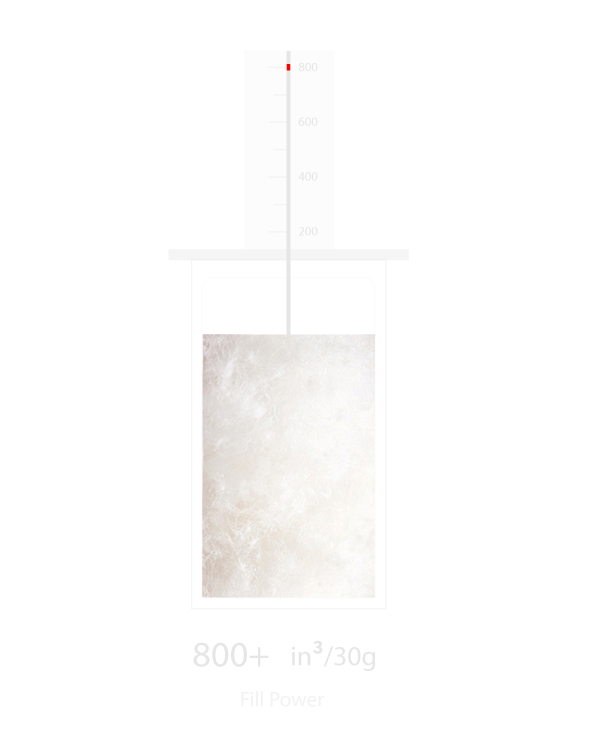
Fill Power
“Fill Power” is a critical indicator which reflects the insulation ability of feather & down products, which is also a measurement of the space occupied by a designated material. The higher fill power means it keeps more air volume, namely the better insulation ability. The international unit of fill power measurement is in³/30g, it says under certain conditions, the exact cubic inch of 30 grams of down occupied. Down content is closely related to fill power.
Professional explanation by Huaxiong, Wang
Fill Power is an indicator of measuring the quality of down washing, drying, and storing. Meanwhile, it’s also a key factor of insulation ability. Fill power is not a fixed indicator after years of observations and experiments. Longtime storage, pressure or freezing could reduce the fill power, but it could be recovered to some extent after insolating.
Professional explanation by Huaxiong, Wang
Fill Power is an indicator of measuring the quality of down washing, drying, and storing. Meanwhile, it’s also a key factor of insulation ability. Fill power is not a fixed indicator after years of observations and experiments. Longtime storage, pressure or freezing could reduce the fill power, but it could be recovered to some extent after insolating.
Turbidity
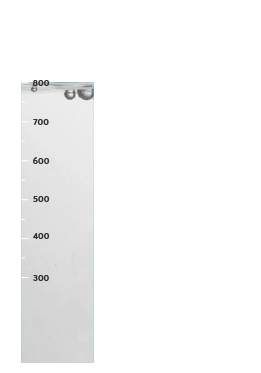
Turbidity is a key indicator which represents the cleanliness of feather & down materials. Typically, the turbidity is measured by observing the solution sample after down wash. The total quantity of insoluble particulates remained in the solution sample after down wash determines the result of turbidity, whether the particles are organic or inorganic.
Oxygen NO.
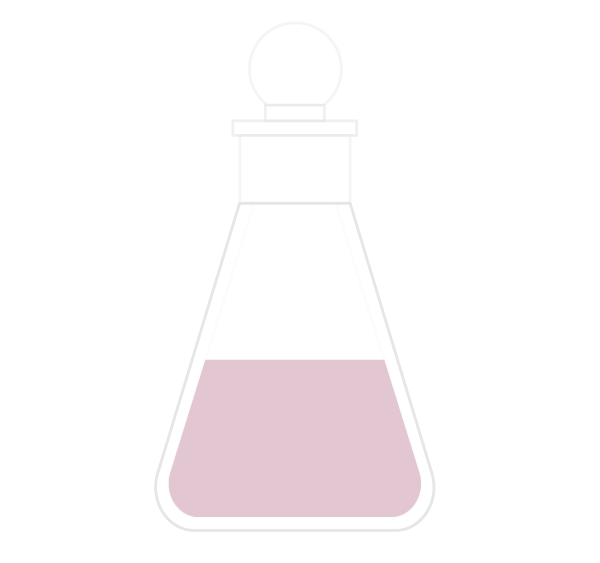
Oxygen No. represents the volume of reducing substances remained in feather & down material. This indicator is measured by the amount of oxygen that has been consumed by the reducing substance when oxidized under certain conditions. The unit of Oxygen No. is mg (oxygen)/ 100g (down).
Down’s chemical property is quite stable; it is hard to be oxygenated. The reducing substances inside has active chemical property, whether they are organic or inorganic. In some cases, such as humid environment, reducing substances will help microorganism increase and damage the feather & down quality. Reducing substances could be largely decreased after the proper washing process. Therefore, the Oxygen No. is a critical indicator in the down quality evaluation.
Down’s chemical property is quite stable; it is hard to be oxygenated. The reducing substances inside has active chemical property, whether they are organic or inorganic. In some cases, such as humid environment, reducing substances will help microorganism increase and damage the feather & down quality. Reducing substances could be largely decreased after the proper washing process. Therefore, the Oxygen No. is a critical indicator in the down quality evaluation.
Fat & Oil
Waterfowl plumages are covered by fat and oil. The fat and oil can be removed during the washing process. Therefore, the fat & oil rate is another important indicator of down quality after wash.
Method of measurement: The Soxhlet method is generally applied in all kinds of feather & down test methods standards. The technique is dissolving the fat from the plumages in some organic solvent (e.g., ether or diethyl ether). After the solvent has vaporized, weight the fat left inside, then calculate the fat & oil rate.
Method of measurement: The Soxhlet method is generally applied in all kinds of feather & down test methods standards. The technique is dissolving the fat from the plumages in some organic solvent (e.g., ether or diethyl ether). After the solvent has vaporized, weight the fat left inside, then calculate the fat & oil rate.
Color (Non-white)
Color (Non-white) is a technical term in feather & down industry. It refers to the proportion of non-white plumages that existed in the entire batch, which is also called the “Black Spot”. Black spots are natural marks existed in mature goose and duck plumages (except some color marks made by breeders). Black spots don’t mean inferior quality or impurity, actually they are the symbol of mature down with high quality. It doesn’t affect the fill power or insulation ability. There is no 100% pure white goose down in the world. However, most of the down beddings and some down jackets are using white or light color fabric. In that case, the volume of black spots is required to be kept as low as possible. Generally black spots can be eliminated by hand but comes with low efficiency and high cost. Some factories use the machine to pick the black spots, yet both the efficiency and cost are unsatisfied.
COMPARISON OF LABELING STANDARDS FOR DOWN PRODUCTS
Comparison of labeling standards for down products
| 标准/Standard | 澳大利亚/Australia AS 2479-2007 | 加拿大/Canada 2000 | 中国/China QB/T 1193,1194,1195&1196 -2023 (寝具/Bedding) | 中国/China GB/T14272-2021 (服装/Apparel) | 欧盟/Europe EN12934-1999 | 欧盟/Europe EN12934-2025 | 日本/Japan JDFA寝具/服装 Bedding/Apparel | 韩国/Korea KS K2620:2014 | 台湾省 /Taiwan Province CNS 2219 N.1034 | 美国 /USA-2000 | 臻选安心羽绒标准 / Downplus Supreme Standard |
| 成份分析检测方法 Content Testing Method | AS 4823.3 | IDFB-3 | GB/T-10288-2016 | GB/T-10288-2016 | EN-12131 | EN-12131 | JIS-1903 | KS K 0820-7.1 | CNS 13982-3 L3253-3 | IDFB.3 | GB/T-10288-2016 |
| 100%绒 | NA | 75 | NA | NA | 90 | 93 | NA | 100 | NA | NA | NA |
| 95%绒/5%毛 | 95 | 71.25 | 92 | 90 | NA | 90 | 92 | 95 | 95 | 95 | 91 |
| 93%绒/7%毛 | NA | 698 | NA | NA | NA | NA | 90 | NA | NA | 93 | NA |
| 90%绒/10%毛 | 90 | 675 | 87 | 85 | 81 | 85 | 87 | 90 | 90 | 90 | 87 |
| 85%绒/15%毛 | 85 | 63.75 | 82 | 80 | NA | NA | 82 | 85 | 85 | 85 | NA |
| 80%绒/20%毛 | 80 | 60 | 77 | 75 | 71 | 75 | 77 | 80 | 80 | 80 | NA |
| 75%绒/25%毛 | 75 | 56.25 | 72 | 70 | NA | NA | NA | 75 | 75 | 75 | NA |
| 蓬松度 / FILL POWER | |||||||||||
| 检验方法 / Test Method | EN12130 | No offlcial methodMost use IDFB Steam | GB/T-10288-2016 | GB/T 14272 Annex C.3 | EN12130 | EN12130 | Down Power JIS L1903 | Fill Power & Fill Height KS K 0820 7.4 | CNS 13982-8 L3253-8 | IDFB Part 10-B | GB/T-10288-2016 |
| 还原方法 / Conditioning Method | 滚动烘干、 蒸汽还原、 常规还原/TumbleDry, Steam Dry, Regular Dry | 无官方指定 测试方法 | 蒸汽还原法 / Steam | 蒸汽还原法 / Steam | 滚动烘干、 蒸汽还原、 常规还原/Tumble Dry, Steam Dry, Regular Dry | 滚动烘干、 蒸汽还原、 常规还原/Tumble Dry, Steam Dry, Regular Dry | 蒸汽还原法 / Steam | 蒸汽还原法 / Steam | 蒸汽还原法 / Steam | 蒸汽还原法 / Steam | 蒸汽还原法 / Steam |
| 圆筒/Cylinder | EN | IDFB | IDFB | IDFB | Lorch | Lorch | JIS Steel Cylinder | JIS Acrylic or Steel | Lorch | IDFB | IDFB |
| 100%绒 | 标识蓬松度 土5% | 标识蓬松度 土5% | NA | NA | 标识蓬松度 土5% | 日本服装无强制规定偏差范围, JIS-1903对于蓬松度无强制最低要求。 (日本寝具新黄金标签要求 ≥300cm°/9, 优质黄金标签要求 ≥350cm°/g, 豪华黄金标签要求 ≥400cm°/9, 超值黄金标签要求 ≥440cm'/g) | NA | 标识蓬松度 土5% | 标识蓬松度 土5% | NA | |
| 95%绒/5%毛 | 17.5cm(鹅)/16.5cm(鸭) | 17.5cm(鹅)/16.5cm(鸭) | 125cm | 18.0cm(鹅)/17.5cm(鸭) | |||||||
| 93%绒/7%毛 | NA | NA | NA | NA | |||||||
| 90%绒/10%毛 | 17.0cm(鹅)/16.0cm(鸭) | 17.0cm(鹅)/16.0cm(鸭) | 12 0cm | 17.5cm(鹅)/17.0cm(鸭) | |||||||
| 85%绒/15%毛 | 16.5cm(鹅)/15.5cm(鸭) | 16.5cm(鹅)/15.5cm(鸭) | NA | NA | |||||||
| 80%绒/20%毛 | 15.5cm(鹅)/14.5cm(鸭) | 15.5cm(鹅)/14.5cm(鸭) | 11.0cm 105cm | NA | |||||||
| 75%绒/25%毛 | 15.0cm(鹅)/14.0cm(鸭) | 15.0cm(鹅)/14.0cm(鸭) | 11.0cm 105cm | NA | |||||||
| 种类鉴定(鹅毛绒含呈%)/ SPECIES | |||||||||||
| 国家标准极限范围 / Country Standard Limit | ≥90 | ≥go | ≥85 | ≥85 | ≥70 | ≥70 | ≥90 | ≥80 | ≥90 | ≥90 | ≥86 |
| 测试方法 / Specie Test Method | AS 2479-2007 Annex C | IDFB-12 | GB/T-10288-2016 | GB/T-10288-2016 | EN 1162X | EN 1162X | JIS L 1903 | KS K 0820 | CNS13982-X L3253-X | IDFB-12 | GB/T-10288-2016 |
| 耗氧呈 / OXYGEN | |||||||||||
| 国家标准极限范围 / Country Standard Limit | <10mg/100g | NA | ≤5.6mg/100g | ≤5.6mg/100g | <20mg/100g | <20mg/100g | <4.8mg/100g | <10mg/100g | NA | <10mg/100g | ≤3.2mg/100g |
| 耗氧量测试方法 / Oxygen Test Method | AS 4823.2 | IDFB-7 | GB/T-10288-2016 | GB/T-10288-2016 | EN 1162 | EN 1162 | JIS L 1903 | KS K 0820:2014-7.3 | CNS 13982-7 L3253-7 | IDFB-7 | GB/T-10288-2016 |
| 浊度 / TURBIDITY | |||||||||||
| MM | NA | NA | ≥500mm | ≥500mm | >300mm | >300mm | >500mm | >300mm | >300mm | >300mm | 1000mm |
| 浊度测试方法/Turbidity Test Method(mm) | AS 4823.7 | IDFB-11 | GB/T-10288-2016 | GB/T-10288-2016 | EN1164 | EN1164 | JIS L 1903 | KS K 0820:2014-7.5 | CNS 13982-9 L3253-9 | IDFB-11 | GB/T-10288-2016 |
| 残脂率 / FATAND OIL | |||||||||||
| 国家标准极限范围 / Country Standard Limit | NA | NA | ≤1.2% | ≤1.2% | 0.5%-2.0% | 0.5%-2.0% | ≤1.0% | 1.50% | NA | NA | ≤1.0% |
| 测试方法 / Test Method | IDFB-4 | IDFB-4 | GB/T-10288-2016 | GB/T-10288-2016 | EN1163 | EN1163 | JIS L 1903 | KS K 0820:2014-7.9 | CNS 13982-4 L3253-4 | IDFB-4 | GB/T-10288-2016 |
| 微生物/ MICROBIAL | |||||||||||
| 国家标准极限范围 / Country Standard Limit | NA | NA | NA | NA | ≥20mg/100g时检测 | ≥20mg/100g时检测 | NA | NA | NA | NA | 检测 |
| 测试方法 / Test Method | NA | NA | NA | NA | EN1884 | EN1884 | NA | NA | NA | NA | GB/T-14272-2011 Annex C.9 |